24H After Sale Service Center
Wechat: EXCITECH-SUPPORT1
How To Choose A Palletizing RobotHow To Choose A Palletizing RobotIn whole-house customization factories, palletizing is often an underrated part of the entire flexible production line. Many factories focus on selecting nesting, drilling and edgebanding main machines in the early stage. Only after the production line is put into operation do they find that the palletizing process cannot keep up with the pace. Issues such as panel offset, loose pallet patterns and time-consuming commissioning for order changes will directly slow down the circulation efficiency of the whole line.
When selecting a palletizing robot, you should not only check the payload and reach. Application compatibility is the primary criterion. Panel palletizing works on a totally different logic from standard carton palletizing. Panel sizes change frequently between batches, and panels feature irregular contours after edgebanding and grooving, which set higher requirements for positioning tolerance. General-purpose robots are built with underlying algorithms for standardized materials. When switching between multi-size panels, the commissioning cost will keep rising. You also need to pay attention to the open compatibility of the overall solution. Many factories have existing nesting main machines and conveyors from different brands. If the robot can only work with specific equipment, later production line upgrading and new process addition will be restricted. Prioritize systems that can connect to existing control systems and independently complete vision capture and coordinate compensation to cut extra integration work. Maintenance should also be taken into account. The robot hardware is only part of the package. Subsequent algorithm iteration and on-site tuning support determine its long-term performance. Models with outsourced core algorithm modules have longer response cycles for special pallet pattern requirements. Equipment with self-developed systems offers greater flexibility for iterative optimization under site conditions.
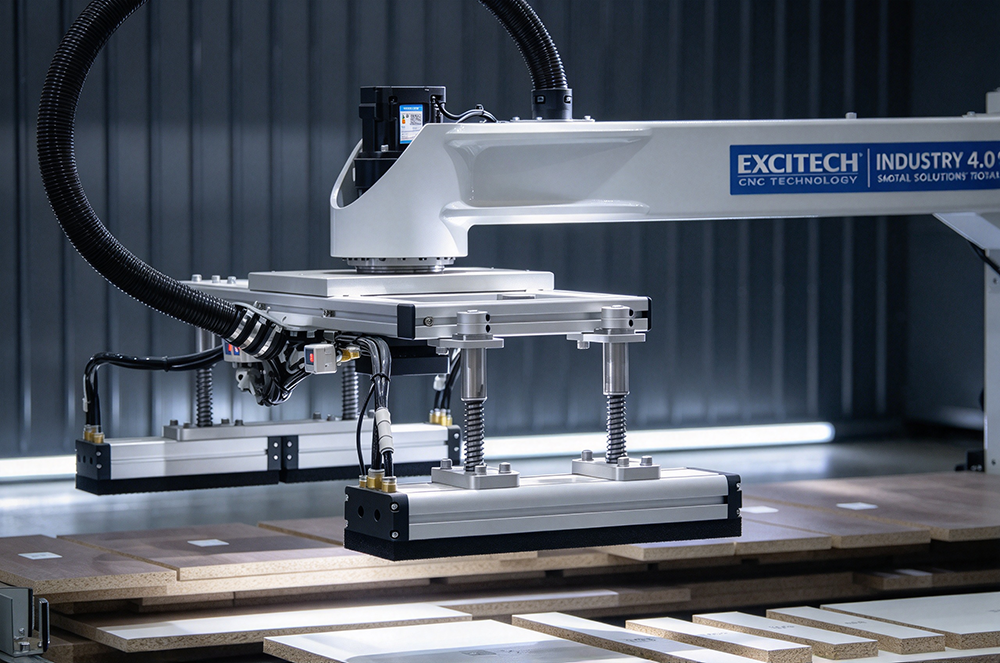
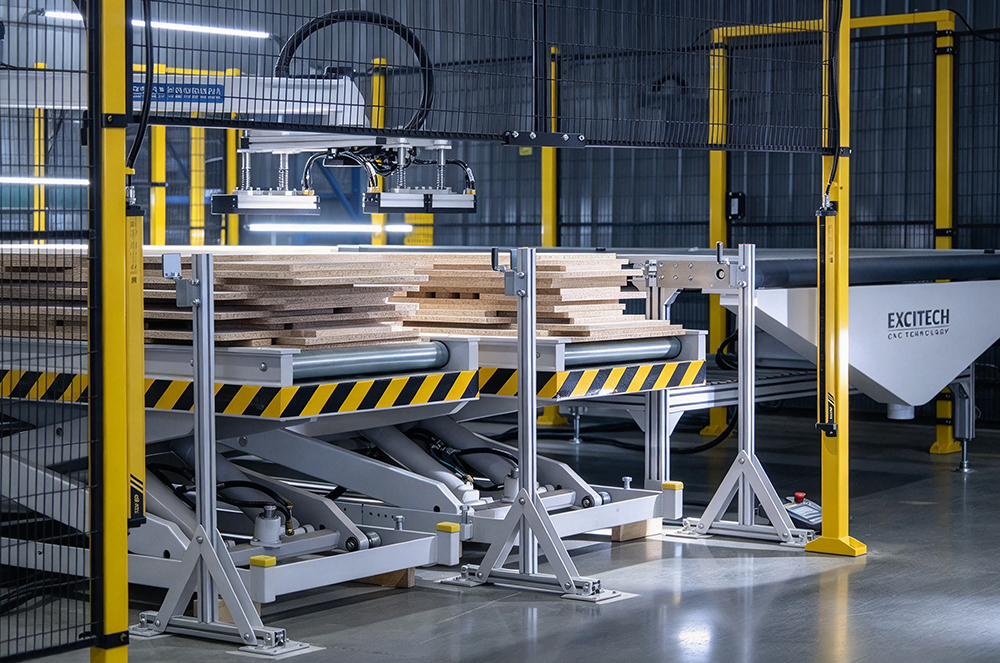
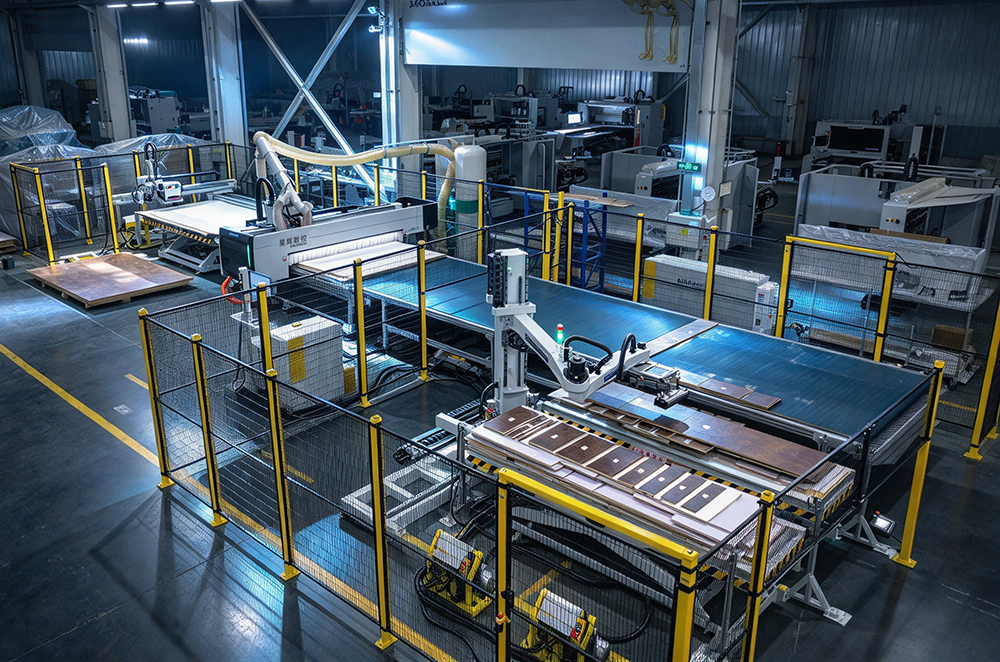
Q: Does a palletizing robot with higher payload always work better for nesting panel palletizing?A: No. The payload only needs to match the weight of a single panel plus the gripper weight. Robots with excessive payload generate greater motion inertia. They are more likely to cause panel scratches during high-speed picking and placing of thin panels, and also take up more floor space. Q: Is vision an optional feature? Can palletizing run normally without vision?A: Vision is unnecessary for scenarios where materials arrive at fixed positions with unchanged dimensions. Most orders in whole-house customization are non-standard panels with incoming position deviations. Vision recognition corrects positional errors and reduces palletizing failures. Q: How to choose between 4-axis and 6-axis robots for panel palletizing?A: 6-axis robots deliver higher flexibility and suit operations requiring multi-angle flipping. For flat stacking of nested panels, complex posture adjustment is not required. 4-axis robots feature a simpler structure and shorter motion paths, making them better suited for this process in terms of stable cycle time and space occupation. Workshop layout, order structure and shift arrangements vary from factory to factory, so there is no universal solution for selection. A reliable approach is to first clarify your panel size range, pallet pattern requirements and existing line interface conditions, then compare the algorithm capability and technical support system of the equipment. EXCITECH 4-axis nesting and palletizing robot is independently developed and manufactured by EXCITECH. Equipped with self-developed vision recognition modules and dedicated palletizing algorithms, it is built for the variable production conditions of whole-house customization panels. It can pick and neatly stack panels after nesting, adapt to frequent order changes in factories and meet the deployment demands of flexible nesting lines.
|