24H After Sale Service Center
Wechat: EXCITECH-SUPPORT1
How to Select Robots for Whole‑House Customization ManufacturersWhen whole‑house customization factories pursue automation upgrades, many plant managers turn their attention to panel unloading and stacking robots. A common pitfall for purchasers is focusing solely on the parameters of robot arms while overlooking compatibility between the robot and existing nesting production lines. Robots are not standalone equipment. They must interface with nesting machines, conveyor lines and edgebanders to perform a full sequence of tasks including raw‑material loading, panel sorting, unloading and stacking. The core of robot selection is not merely choosing payload and reach, but evaluating whether the complete system can accommodate the production characteristics of the customization industry: variable panel sizes and highly fragmented orders.
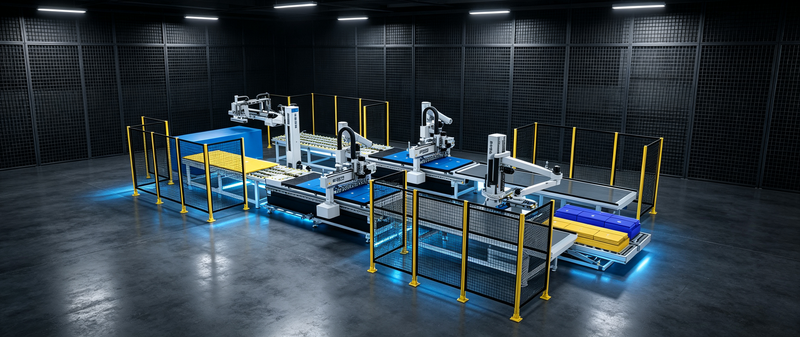
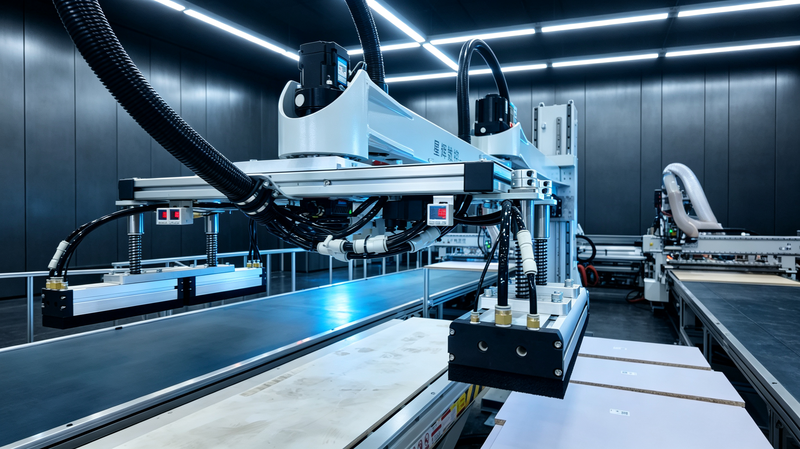
Four practical dimensions should be prioritized when selecting panel unloading and stacking robots. First is production‑line compatibility: whether existing nesting cells and conveying structures can interface with the robot system, and whether retrofitting requires extensive modification to the original workshop layout, which directly impacts commissioning timelines. Second is panel‑recognition capability. Custom orders feature widely varying panel dimensions; under mixed‑order production, the system’s ability to identify panels of different specifications determines stacking stability. Third is algorithmic logic. Stacking is more than simple pick‑and‑place. Well‑planned stacking arrangements reduce panel collisions and cut down manual re‑sorting work. Fourth is equipment origin and technical support. Manufacturers with in‑house developed equipment can fine‑tune programs according to workshop operating conditions. Compared with outsourced integrated solutions, they deliver smoother subsequent commissioning and feature iteration. FAQ Q1: Is it necessary for small‑to‑medium‑sized whole‑house customization factories to deploy unloading and stacking robots? Q2: Does a higher payload always mean better performance for robot selection? Q3: What are the differences between outsourced integrated robot solutions and robots self‑developed by equipment manufacturers? The unique mixed‑order production model of the customization industry sets higher requirements for vision recognition and algorithm performance of unloading‑and‑stacking robots. Many generic robots only handle uniformly‑sized panels and suffer recognition errors and disorganized stacking when faced with mixed‑size batches. For whole‑house‑customization unloading‑and‑stacking applications, EXCITECH has independently developed a 4‑axis unloading and stacking robot. The complete robot system integrates self‑developed vision‑recognition modules and stacking algorithms, suited for panel picking, sorting and stacking downstream of nesting cells. The vision module identifies mixed‑order panels of diverse sizes. Built‑in algorithms plan placement sequences and stacking postures to minimise surface scratches and corner collisions. Interfaced with EXCITECH nesting cells, the robot automatically picks finished panels post‑cutting and performs layered stacking, replacing repetitive manual handling. Optimised for planar panel‑handling tasks, the 4‑axis design delivers smooth, stable motion with a compact footprint for easy integration into existing production lines. Owning core algorithm and hardware‑development capabilities, the manufacturer can adjust recognition logic and stacking strategies according to factory‑specific panel characteristics. It supports mixed‑line production of cabinet bodies and doors for whole‑house‑customization factories, enabling automated upgrading of unloading workflows and lowering panel‑damage risks caused by manual handling. Tags: #WholeHouseCustomizationAutomation #StackingRobot #PanelFurnitureRobot #FurnitureFactoryAutomationRetrofit #EXCITECH
|